Bioprocess
Your process working in the plant, not just in the lab.
More than 8 years scaling biotechnology processes and leading start-ups. I work from the pilot stage until the plant is producing, as the client's technical representative or as extra process engineering capacity for your team.
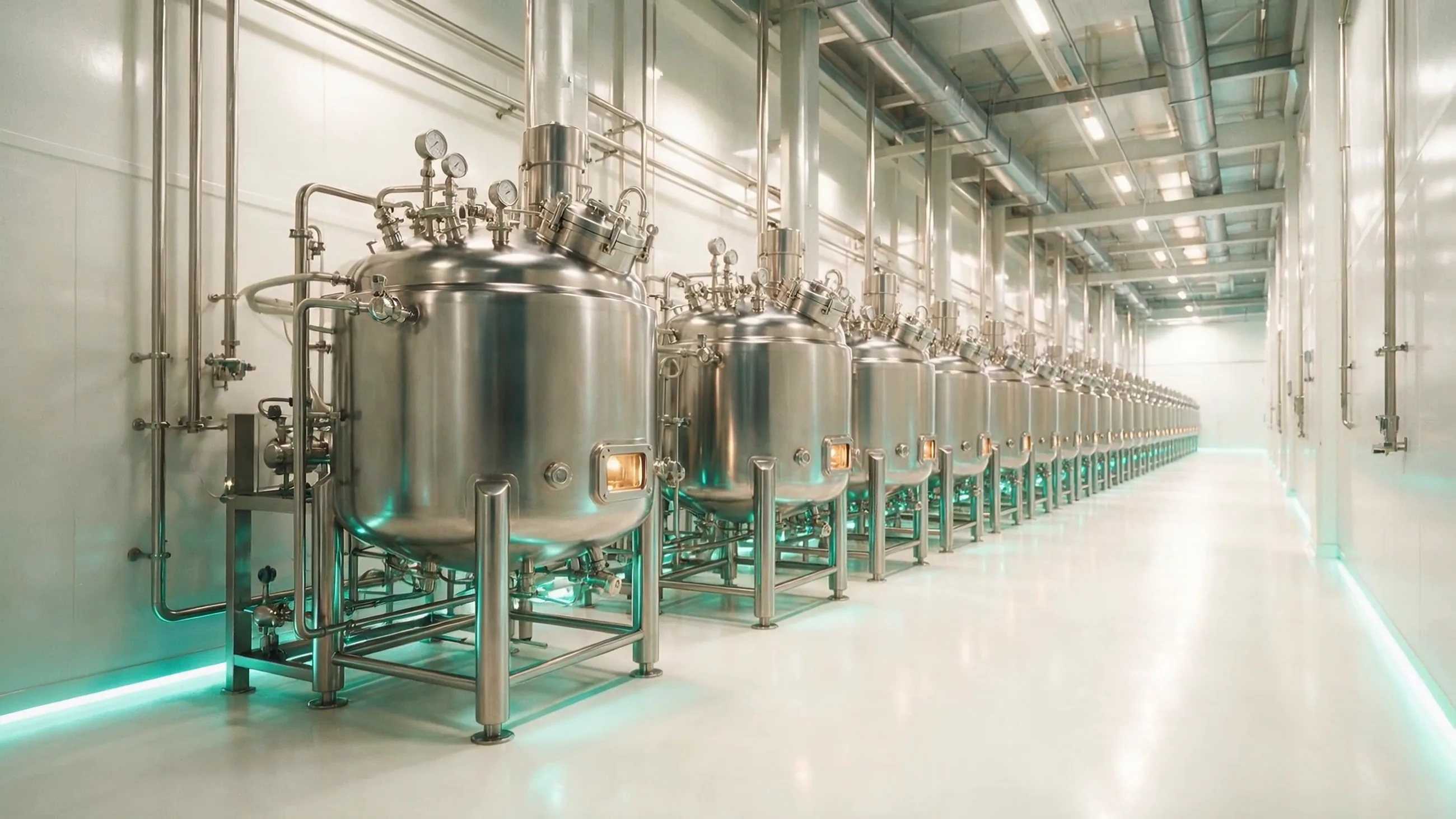
In short
Dani Canton is a freelance bioprocess engineer with more than 8 years scaling biotechnology processes from the laboratory to GMP manufacturing. He works on four fronts: leading the FAT and SAT of bioprocess equipment as the client's technical representative, scale-up from pilot to production and tech transfer, process engineering (URS, P&ID, equipment specification, FMEA, DQ) under GMP and ISO, and optimisation of running processes. He is based in Barcelona and travels wherever the client is, in Spain and abroad.
The problem
The equipment arrives, and it does not do what the quote promised.
It is the usual story: process equipment is signed off against a specification, months go by, and on start-up day the differences show up. The control loop does not hold the setpoint where it should, sterilisation does not reproduce the cycle, the software does something close to what you asked for but not what you asked for. And the people who have to spot it are a plant team that is also doing its own job that day.
The other problem sits further upstream: a process that runs well in the pilot plant and falls apart when it moves up in scale. The transfer is done by recipe, not by judgement, and what gets lost on the way is exactly what made it work.
Both are solved the same way, with someone who knows the process and sits on your side of the table.
What I do
Four things, and all four end in the plant.
FAT/SAT and start-up
I lead the FAT and SAT of your bioprocess equipment (bioreactors, process systems, CIP) from your side: technical liaison with the manufacturer, logging and follow-up of deviations, reporting to management and a close-out report. My interest is that the equipment meets the specification, not selling you the equipment.
Scale-up and tech transfer
Moving a process from pilot to production, and transfers between plants or to CMOs. I find the weak points before they show up at scale, which is when they get expensive.
Process engineering
URS, P&IDs, equipment specification, FMEAs and DQ under GMP and ISO. I translate what the process needs into a scope that engineering and the manufacturer can execute without guesswork.
Optimisation and consulting
Review of running processes to gain yield, robustness or control (NOR and PAR ranges, critical parameters). An honest diagnosis and an action plan, not an 80-page report.
How it works
From the first call to the close-out report.
- Scope
You tell me what equipment or process you are dealing with. I review the documentation that already exists (URS, quote, protocols) and tell you what I would do, how long it takes and what I need from you.
- Preparation
Before setting foot in the plant: a test protocol against the real specification, acceptance criteria agreed with you and a list of what has to be ready on day one. This is where the expensive days are saved.
- Execution
In the plant or at the manufacturer's site, running the tests and keeping the deviation log. A daily report in a format you can read in five minutes, so that you and your management know every evening where the project stands.
- Close-out
A report with what was tested, what happened, what is still open and who has to resolve it. Documented so it can feed the validation and so your team can carry on without me.
The proof
Where I have done this before.
- More than 8 years in process: industrial fermentation and USP and DSP technology transfer, from the lab to the plant and to CMOs, at Lipotec (Lubrizol), Farmhispania and Rolabo.
- At Tecnic, Project Manager of seven-figure turnkey projects (full-plant start-ups, one of them international) and then Process Product Owner of the portfolio of laboratory, pilot and production bioreactors.
- Education: Biotechnology and a Master's in Biological and Environmental Engineering from the UAB (Universitat Autònoma de Barcelona).
- Now, as a freelancer: technical advisor to the client for the SAT of a fermentation plant in the food tech sector.
How I work
What you can take for granted.
- You work with me, not with an organisation. The person who writes the proposal is the person who will be in the plant.
- Scope and budget agreed before we start. If something falls outside the scope, I tell you when it happens, not on the invoice.
- I tell you what you do not need. Inflating the scope is the fastest way to never work with a client again.
- Everything stays yours. Documented and operable by your team. The goal is that you do not depend on me.
FAQ
What people usually ask me
What exactly does a client's technical representative do in a SAT?
It is the person who runs and supervises the acceptance tests defending your interests, not the manufacturer's. In practice: preparing the protocol against the contracted specification, leading the tests, logging every deviation with its criticality, handling the technical liaison with the manufacturer, keeping your management informed during the SAT and delivering a close-out report with what was resolved and what is still open.
What is the difference between a FAT and a SAT?
The FAT (Factory Acceptance Test) takes place at the manufacturer's site, before the equipment is shipped, and is there to catch what can be fixed without the cost of having it already in your plant. The SAT (Site Acceptance Test) takes place in your plant, with your utilities and your operators, and checks that the equipment still meets the specification once installed and connected to reality. Failing at the FAT is the cheap option.
Do you work under GMP?
Yes. My process experience is in GMP environments in pharma, cosmetics and biotechnology, and the documentation I produce (protocols, deviation reports, DQ) is designed to fit into the client's validation package. I do not sign as a Qualified Person and I do not replace your quality department: I work with it.
Do you travel to the plant?
Yes. Start-up and acceptance testing are on-site work, in your plant or at the manufacturer's facilities. I am based in Barcelona and travel wherever it is needed, in Spain and abroad. Protocol preparation, document review and consulting are done remotely.
What do you need to give me a quote?
Not much: what equipment or process it is, what stage it is at (quote signed, equipment being built, already installed), what documentation exists and when you need it. With that I can tell you how I would approach it and how many days it takes. If the scope is not clear yet, helping you define it is part of the job.
Can you help if my process works but does not perform?
Yes, that is the optimisation case. It starts with understanding where the real limit is (biology, equipment, control or the way it is operated), which is almost never where people think. That leads to a diagnosis and an action plan prioritised by what returns the most performance per euro invested.
Contact
Do you have equipment to accept or a process to scale?
Tell me the scope and I will tell you how I would approach it. If I am not the right person, I will tell you that too.
Let's talk